|
Title: The Pantheon
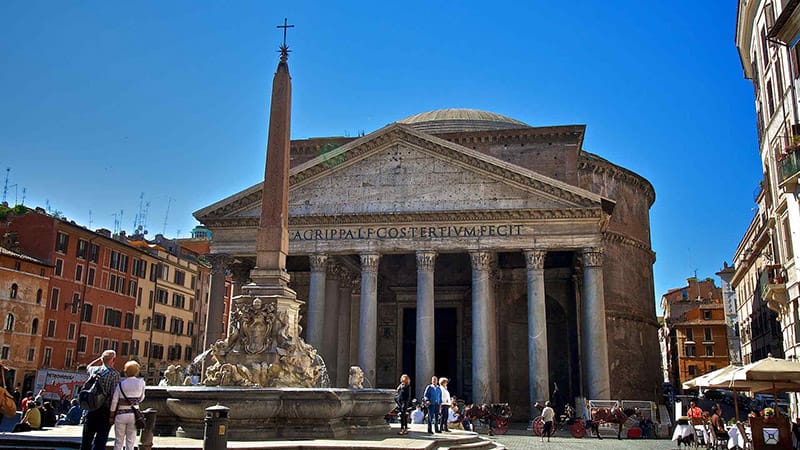
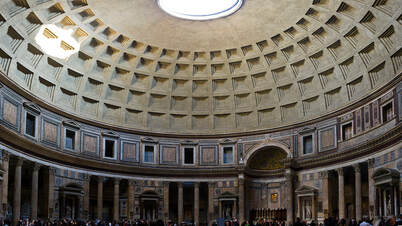
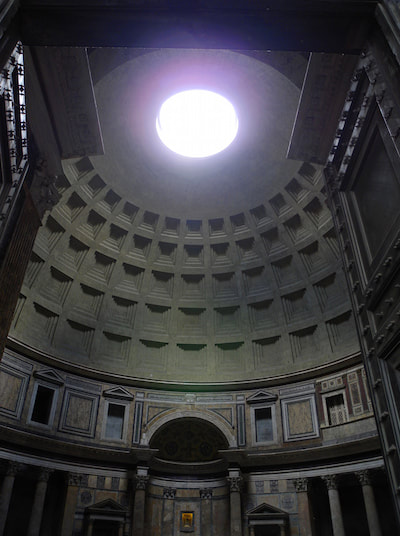
Place of Origin: Rome, Italy Date: 125 CE Dimensions: 142 feet in diameter, 71 feet tall Materials: Concrete, brick The Pantheon is believed to have been constructed during the reign of the emperor Hadrian as a temple to all the gods. Recent scholars have debated the nature of the Pantheon’s construction and its exact purpose, but one thing remains certain: it has a clear connection to the cosmos. When one steps into the Pantheon, they are greeted by a perfectly circular interior space with a large domed ceiling. In the center of the dome is an oculus, which lets in light from the outside world. This oculus draws the viewer’s attention up to the cosmos and makes them think of divine power. The oculus reflects the movement of the heavens, with light from the sun coming in and moving across the room throughout the day. Magnificent architecture focusing on perfect geometry adorns the large room, further emphasizing the idea of divinity, power, and perfection. In addition to this, the Pantheon originally contained statues of gods and deified emperors. Here people could come to worship in a place that seemed truly divine. Even after the fall of the Roman empire, the Pantheon was turned into a Catholic church. Its connection to divinity and the cosmos remained strong. Today, the magnificent architecture of the Pantheon still serves as a representation of the cosmos on earth and captivates millions of tourists each year. Paul A. Ranogajec, "The Pantheon (Rome)," in Smarthistory, December 11, 2015, accessed December 9, 2019, https://smarthistory.org/the-pantheon/. |
|
Title: Sainte-Chapelle
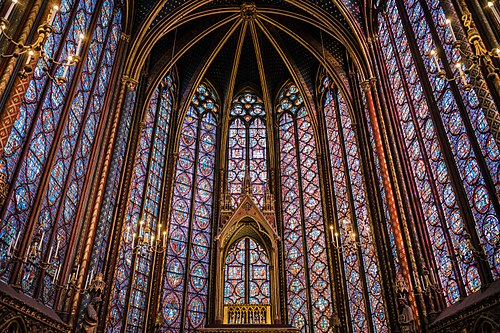
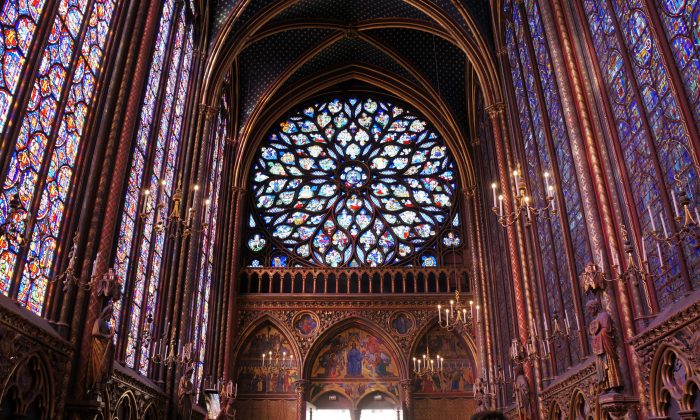
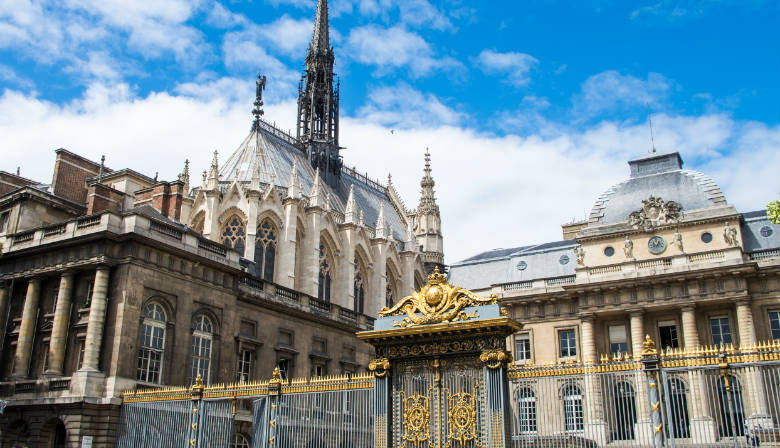
Place of Origin: Paris, France Date: 1248 Dimensions: 118’ x 56’ x 139’ Material: Stone, glass Sainte-Chapelle was commissioned by King Louis IX of France. It was used as the king’s royal chapel as well as a reliquary for Christ’s Crown of Thorns. Relics are the bodily remains of holy figures, or remains of items that holy figures once wore or owned. Relics were an important aspect of Christian medieval worship; they were held sacred, and it was even believed that they could perform miracles. The Crown of Thorns was an especially important relic because it was believed that it really did touch the body of Christ. Because of its connection to the king’s divine rulership and the Christian religion, it makes sense that Sainte-Chapelle’s magnificent architecture evokes ideas of the cosmos. Elaborate stained glass lancet windows reach into the sky and direct the viewer’s gaze towards the heavens. These windows also flood the chapel with colorful light, making it seem unearthly and divine. The lines between the windows are thin, which emphasizes the fact that so much of the chapel is made of glass. The stained glass windows depict biblical scenes, and throughout the chapel there are sculptures of angels, saints, and other holy figures. Religious ceremonies were once held in Sainte-Chapelle, and the combination of magnificent architecture with music and incense would have worked to make those attending the ceremony believe that they had truly entered the realm of heaven. Beth Harris and Steven Zucker, "Sainte-Chapelle, Paris," in Smarthistory, May 24, 2017, accessed December 9, 2019, https://smarthistory.org/sainte-chapelle-paris/. |
|
|
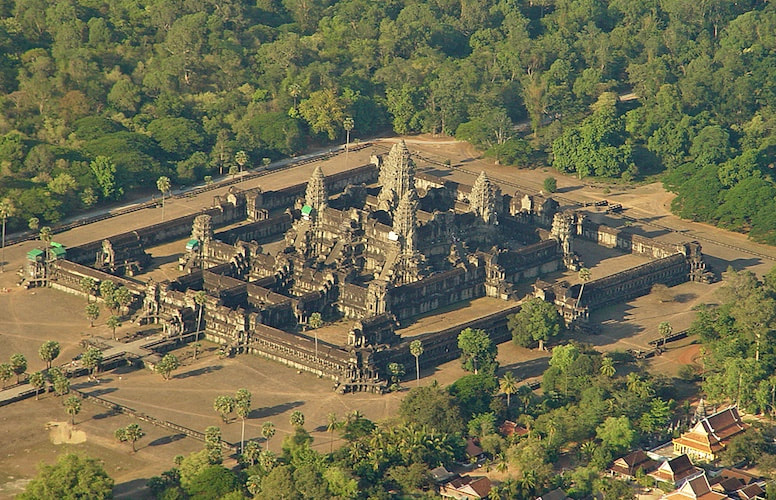
Title: Angkor Wat
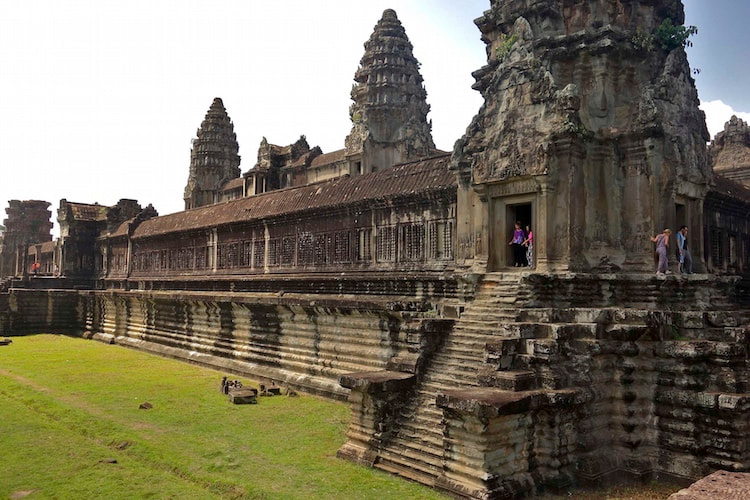
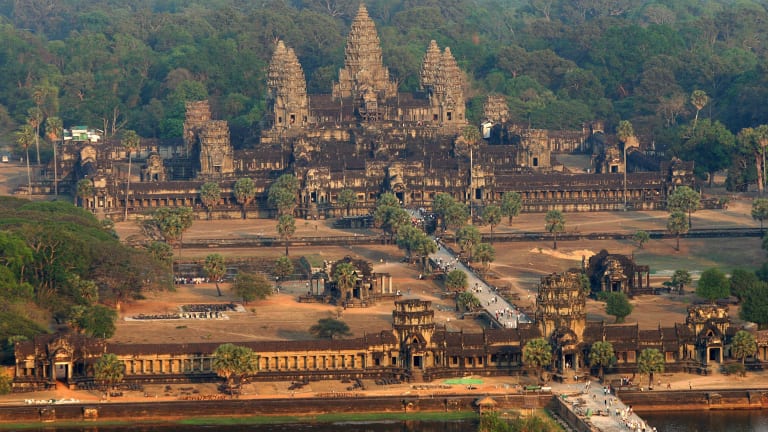
Place of Origin: Siem Reap, Cambodia Date: 1116-1150 Dimensions: 402 acres, 213 feet tall Material: Stone Angkor Wat is the largest religious monument in the world. It is a temple complex dedicated to the Hindu god Vishnu. In Hinduism, temples serve as homes for the gods. Kings would often construct temples to legitimize their claim to the throne and invoke the power and protection of the gods. The larger and more elaborate the temple, the more likely the king was to attract the attention of the god. Angkor Wat was commissioned by King Suryavarman II. At Angkor Wat there are thousands of feet of reliefs depicting Hindu religious stories. Like the biblical scenes depicted in the stained glass windows at Sainte-Chapelle, religious storytelling is an important aspect of feeling connected to the gods and the cosmos. The five stone towers of Angkor Wat are intended to represent the five mountain ranges of Mt. Meru, which is the mythical home of the gods. Mt. Meru is considered to be an axis that connects heaven and earth, and Angkor Wat gives this concept a physical form on earth. The construction of Angkor Wat was planned according to the movements of the sun and the moon. It is aligned with the planets, which directly connects it to the cosmos. Angkor Wat was and still is a place where people go to feel more connected to the gods and the cosmos. Melody Rod-ari, "Angkor Wat," in Smarthistory, August 9, 2015, accessed December 9, 2019, https://smarthistory.org/angkor-wat/. |
|
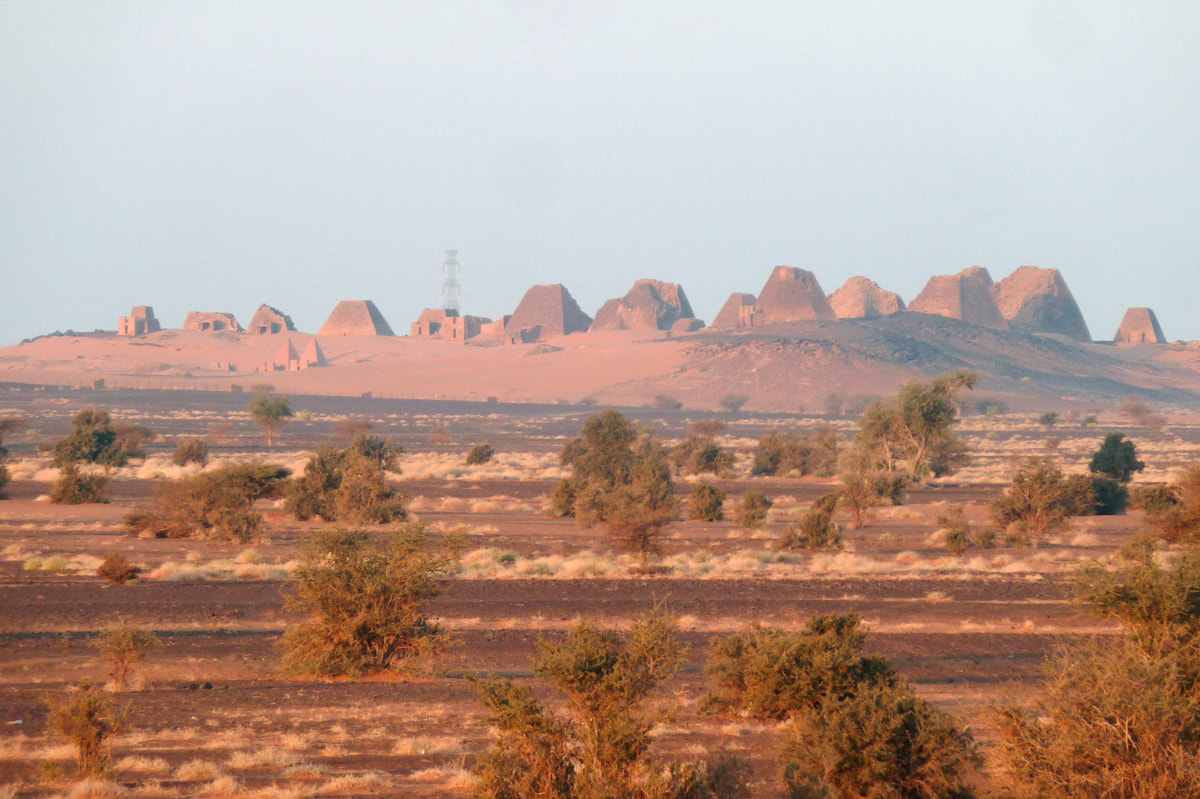
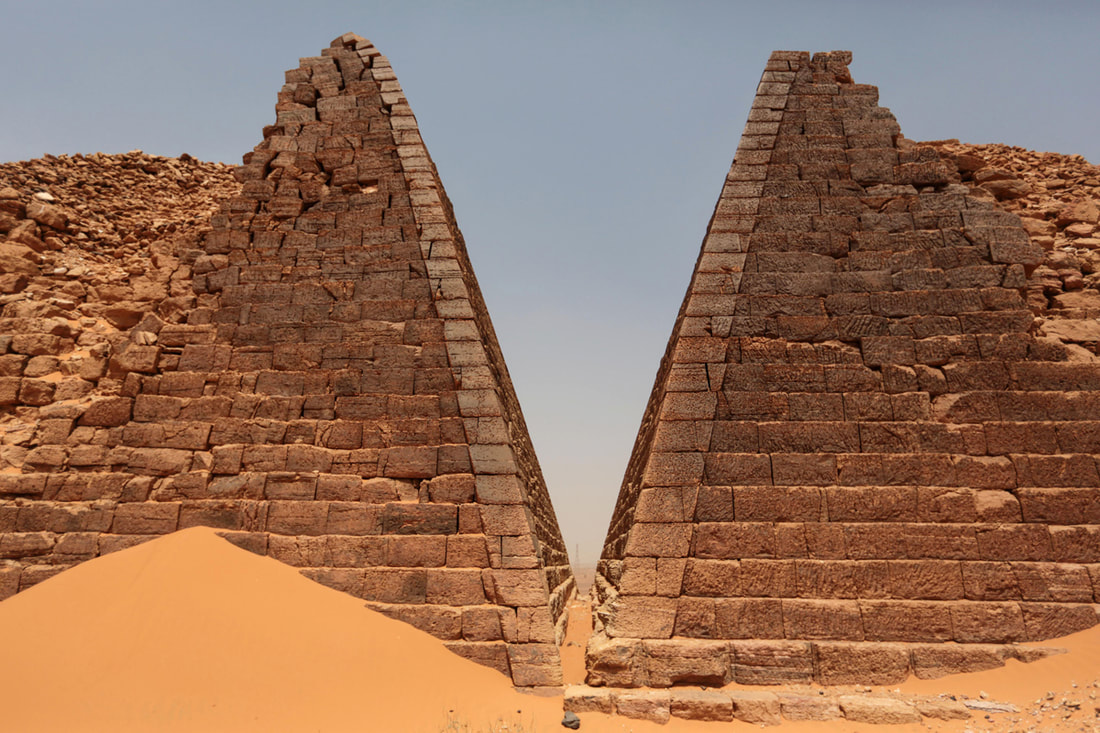
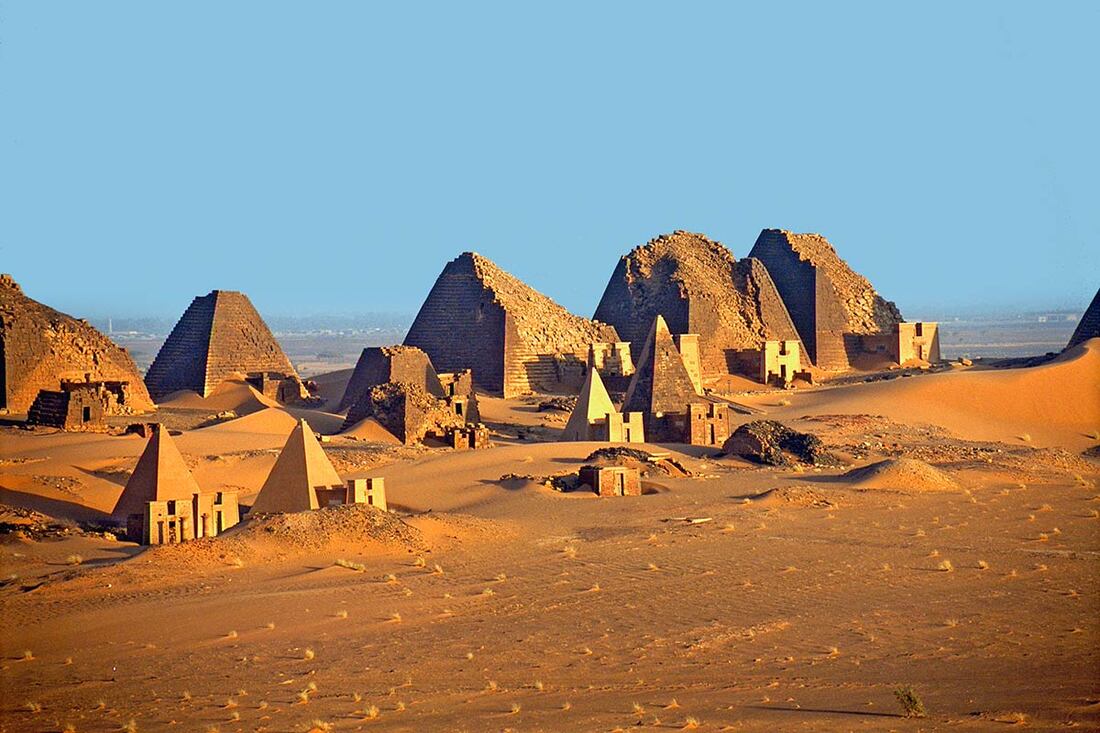
Title: Nubian Pyramids at Meroe
Place of Origin: Meroe (now Sudan), Africa Date: 8 BCE-3 CE Dimensions: Up to 100 feet tall Material: Granite, sandstone The Nubian Pyramids at Meroe were constructed to serve as tombs for the Kushite rulers. At the time the pyramids were constructed, the kingdom of Kush was one of the most powerful kingdoms in the area, with the city of Meroe as its capital. Because of its power and location, Kush frequently interacted with Egypt. Not much is known about the Kushite peoples, but it is believed that Egyptian culture had a lot of influence on Kushite culture. Similar to the pyramids of Egypt, the Nubian Pyramids at Meroe were constructed to demonstrate the power of its rulers. As tombs, the pyramids were meant to memorialize the rulers housed inside them and show their connection to the gods. Like the pharaohs of Egypt, it was believed that the power of the Kushite rulers came from the gods, and that the rulers were divine themselves. The main god of the Kushite religion was Apede-mak, who was often associated with the moon, which shows that the cosmos were an integral part of Kushite religion. Rising out of the stark desert landscape and pointing towards the heavens, the grand size and unique shape of the pyramids achieve their goal in making one think of divine power and the cosmos. Although the tops of many of the pyramids have been destroyed, it is not hard to imagine how grand they must have looked at the time of their creation. The pyramids serve to represent both the power the rulers possessed on earth and the eternal connection they have to the gods. Martin Gray, “Pyramids of Meroe,” Sacred Sites, accessed December 10, 2019, https://sacredsites.com/africa/sudan/pyramids_of_meroe.html. |
|
|
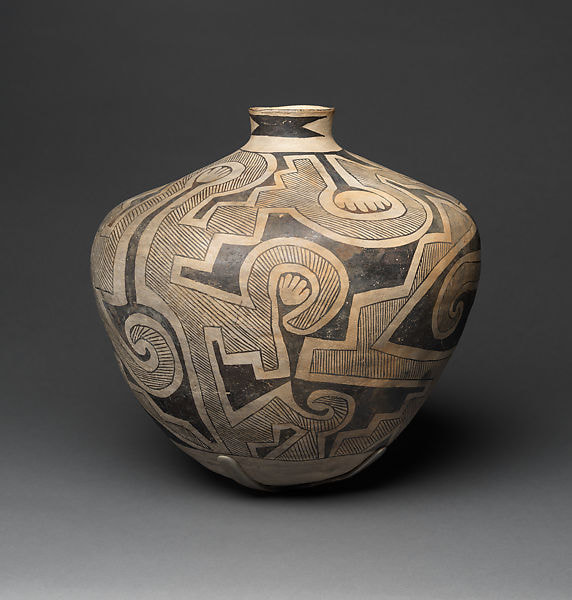
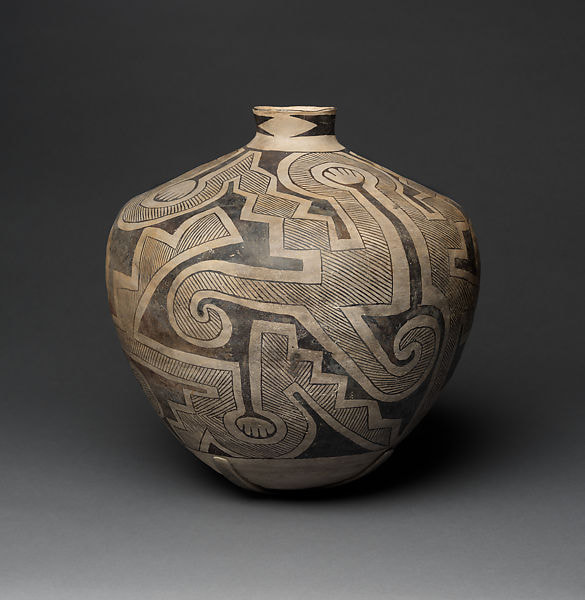
Title: Socorro black-on-white storage jar
Place of Origin: New Mexico, United States Date: 1050-1100 Dimensions: 15” x 17” Materials: Clay and pigment At first glance, it might seem like this piece is out of place in the exhibition. What could a small jar have in common with so many grand works of architecture? More than one might think. This jar was made by the ancestral Puebloan peoples of the Southwestern United States. The Ancestral Puebloans lived in the Four Corners region of the United States. One of the most significant sites where Ancestral Puebloans made their home is Mesa Verde in Colorado. Although there is still much to be learned about Ancestral Puebloan culture, we know that they, like many other Native American cultures, held nature and the elements sacred. Not only were nature and its elements essential to their survival, but gods and goddesses were directly related to natural phenomena. This jar represents how the Ancestral Puebloans interpreted and celebrated nature. It is believed that the imagery on the jar is representative of the movement of water and its circulation underground and from the sky. The geometric patterns are representative of thunderclouds and lightning, and the stripes within these patterns represent rain falling from the sky. To depict this phenomenon in artwork shows that the Ancestral Puebloans, like so many other cultures around the world, were inspired by and worshipped that which came from the cosmos. The Metropolitan Museum of Art, "Socorro black-on-white storage jar," accessed December 10, 2019, https://www.metmuseum.org/art/collection/search/717563. |
|
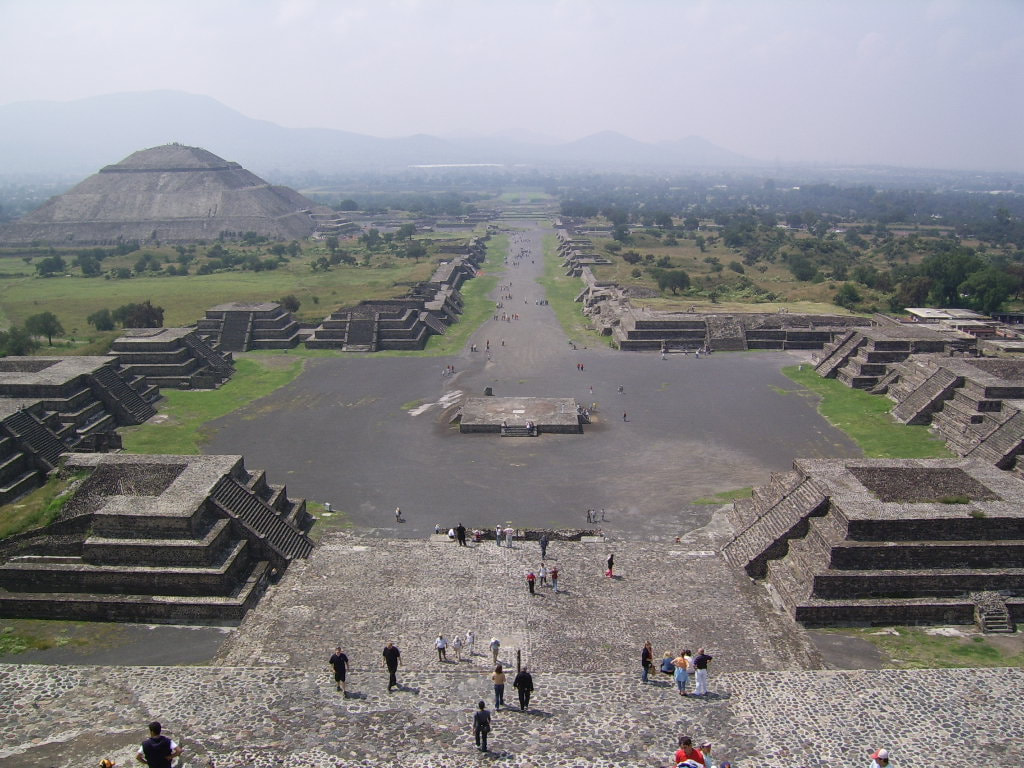
Title: Pyramid of the Sun and Pyramid of the Moon
Place of Origin: Teotihuacan, Mexico Date: 100 BCE-700 CE Dimensions: 213 feet tall (Pyramid of the Sun), 141 feet tall (Pyramid of the Moon) Materials: Stone Teotihuacan was the first large city built in the Americas. Little is known about the culture of the people who originally built it, so much of our knowledge about the site comes from the Aztecs. In the Aztec language Nahuatl, Teotihuacan literally means “city of the gods,” and the Aztecs truly believed that it was a sacred and holy place. The entire city shares a special relationship with the cosmos, as it was built in relation to the location of planets and constellations. It is also lined up perfectly with the cardinal directions. Although not much is known about the culture of the people who built it, we can assume that they worshipped deities associated with the cosmos. The Pyramid of the Sun was built over a cave and may have been associated with a fertility god/goddess, because in Aztec and Maya culture caves are representative of fertility. The pyramids, rising up above everything else in the city, point towards the cosmos just like the Nubian Pyramids at Meroe. Although it is unclear exactly what the pyramids were used for, the cosmic alignment of the city shows that they were most likely monuments that sought to bring the divine nature of the cosmos to earth. Maya Jiménez, "Teotihuacan," in Smarthistory, December 17, 2015, accessed December 10, 2019, https://smarthistory.org/teotihuacan-2/. |
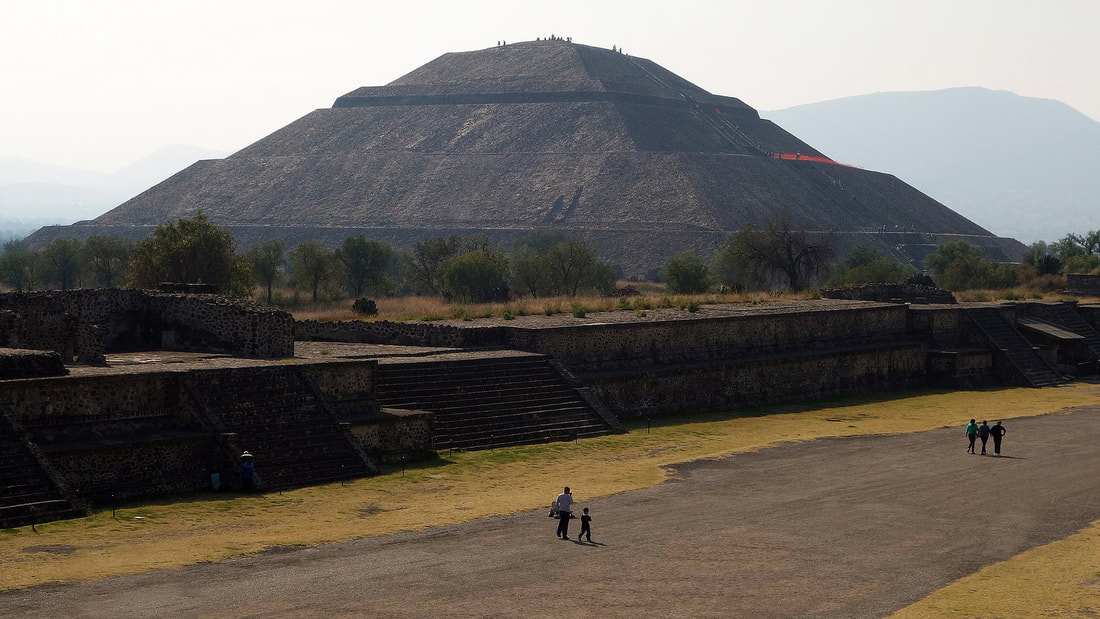
Pyramid of the Sun
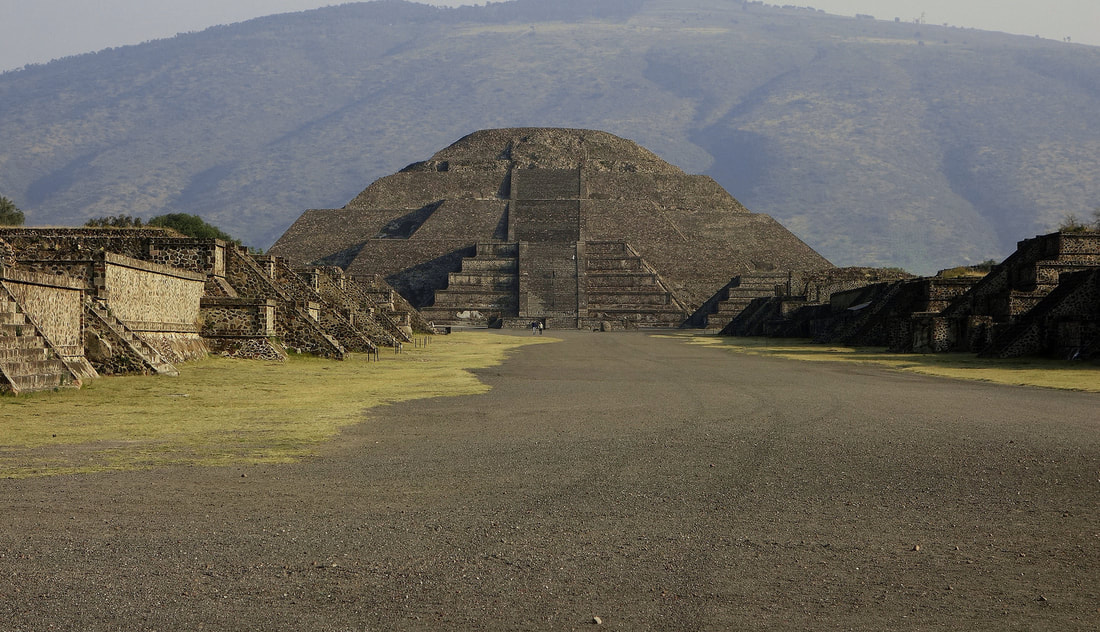
Pyramid of the Moon
|
